

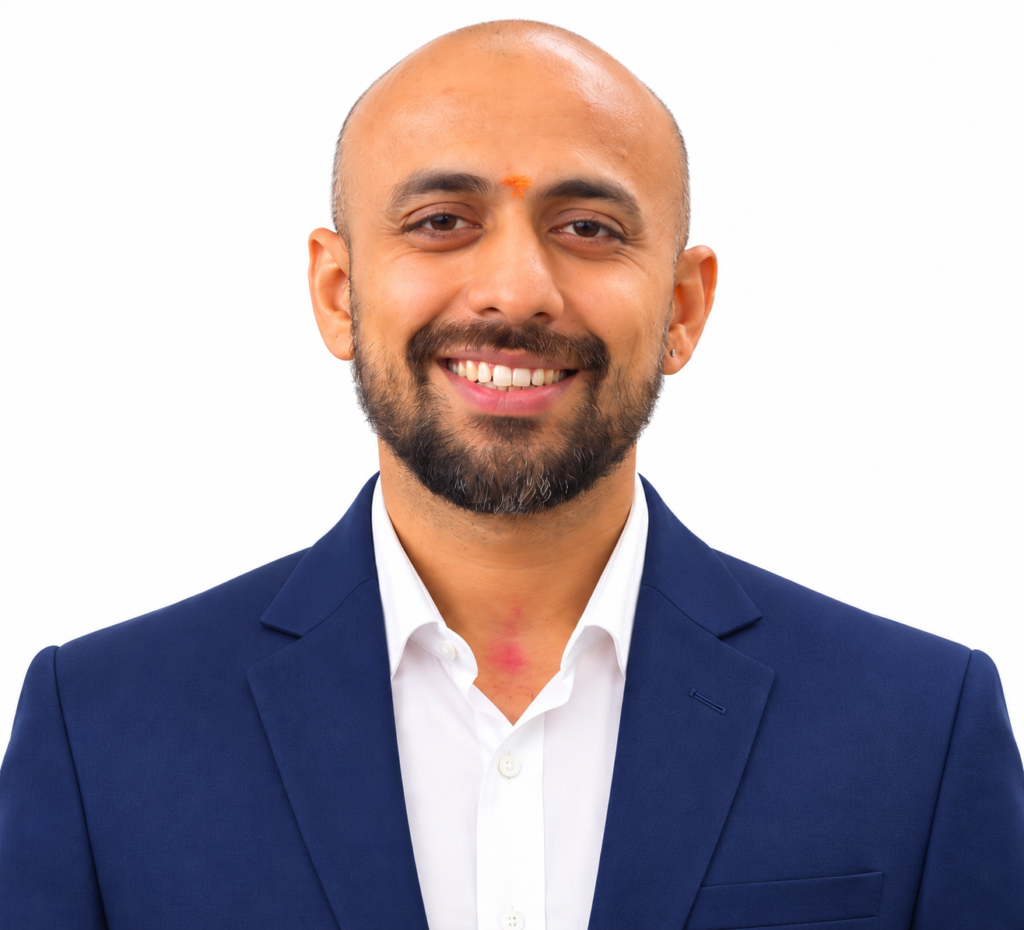
Dr. Vaibhav Patwardhan is a public health professional with 8+ years of experience in MERL systems across health programmes in India. He has worked with organizations like Wadhwani AI, the Gates Foundation, Jhpiego, MSF India, and the Public Health Foundation of India, collaborating with government agencies, donors, implementation partners, and academic institutions to generate evidence and strengthen programme decision-making.
His expertise spans the design and implementation of end-to-end MERL systems, including monitoring frameworks, theories of change, log-frames, evaluation protocols, data collection tools, and standard operating procedures. Dr. Patwardhan has experience evaluating AI-enabled and digital health innovations. At Wadhwani AI, he led evaluation design and MERL planning for AI initiatives and served as Co-Investigator for the Gates Foundation-funded evaluation of HealthVaani, a GenAI assistant for ASHAs. He also served as Principal Investigator for a World Diabetes Foundation-funded evaluation of gestational diabetes services across two states and contributed to the WHO Geneva and MoHFW-supported NAMAI implementation research study.
A Certified Practitioner of Adaptive Management and Learning, Dr. Patwardhan has authored 24 peer-reviewed publications. He holds a Bachelor of Dental Surgery (BDS) and a Master of Public Health (MPH), and has PhD in Public Health.
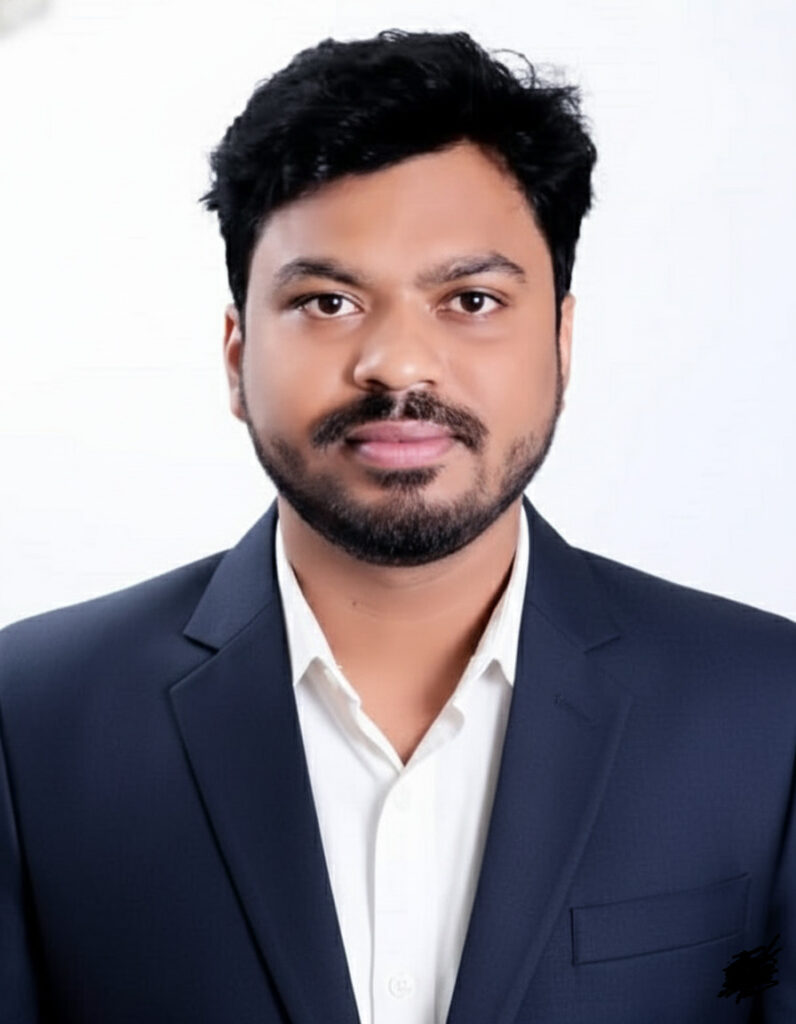

Dr. Madhur Raimule is a Public Health Specialist with over nine years of experience designing and managing large, multi-city, donor-funded health programmes across India. Trained as a medical doctor (MBBS, MD – Community Medicine), he brings strong technical depth combined with hands-on programme leadership across maternal health, NCDs, cancer screening, palliative care, immunisation, and digital health systems.
At Purpose Metrics, Dr. Madhur contributes his expertise in end-to-end programme execution, stakeholder engagement, Monitoring, Evaluation and Learning (MEL), and governance-aligned reporting. He has worked closely with government systems, medical colleges, professional bodies, private hospitals, diagnostics partners, and donors, ensuring high-quality implementation, compliance, and data-driven decision-making. His strength lies in bridging strategy and field realities to deliver measurable, sustainable public health impact

Deepak Chandra Bhatt is a seasoned Monitoring, Evaluation, and Research (MER) professional with over 15 years of experience driving evidence-based decision-making across diverse public health and development programs in India.
He has worked with leading organizations including UNFPA, Jhpigeo, MoHFW and NHSRC where he led the design and implementation of robust RBM and MEL frameworks, large-scale evaluations, and data-driven knowledge systems. His expertise spans HMIS strengthening, digital healthcare platforms, adolescent health, gender and social norms interventions, and RMNCHA+ programs.
Deepak has a strong command of quantitative and qualitative methodologies, advanced data analysis, donor reporting, and stakeholder coordination — consistently ensuring that insights translate into strategic action and measurable impact

Akanksha is a seasoned public health professional with over a decade of experience managing maternal, newborn, nutrition, and gender-focused programs across tribal and rural regions of India. Her expertise spans program design, implementation, and monitoring, with a strong foundation in research, impact assessments, and process documentation.
She has led large-scale initiatives with UNICEF, NHM, and Ekam Foundation, strengthening health systems, capacity building, and digital innovations for quality service delivery. Akanksha brings robust skills in stakeholder coordination, evidence-based program management, and development of data-driven strategies that improve maternal and child health outcomes.

Dr. Vikas Kaushal is an accomplished public health physician with over 15 years of experience in health system strengthening, reproductive health, digital health innovation, and program leadership across India. He has led impactful initiatives with organizations such as UNFPA, USAID, Jhpiego, Save the Children, and the World Bank, focusing on quality of care, adolescent health, and family planning.
An MD in Community Medicine, Dr. Kaushal combines medical expertise with strategic acumen, contributing to policy advocacy, research, and implementation of evidence-based programs. His work spans clinical mentoring, digital health adoption, and multi-stakeholder engagement, driving improved access to equitable healthcare.
He has authored several publications in international journals and received recognition including the Gates Institute Global Health Leadership Award and “120 Under 40” Family Planning Leaders Award by Johns Hopkins Bloomberg School of Public Health.

Anjali Bhatt is a public health professional with over 8 years of experience in health systems strengthening, quality assurance, and gender-responsive programming. She has led large-scale initiatives across Chhattisgarh and Uttar Pradesh, focusing on primary healthcare transformation, community health worker training, and tribal health programs.
At Piramal Swasthya, Anjali spearheaded National Quality Assurance Standards (NQAS) implementation for Health and Wellness Centres, mentored teams under the Tribal TB program, and built capacities for community-based leadership through the Gandhi Fellows initiative. Her earlier work with Mamta HIMC and India Health Action Trust contributed to advancing maternal, child, and adolescent health outcomes through evidence-based interventions and skill-building.
Anjali holds a Master’s degree in Nursing (Obstetrics & Gynecology) from Florence Nightingale College of Nursing, Gwalior, and a Bachelor’s degree in Nursing from Shri Guru Ram Rai Institute, Dehradun

Dr. Chandrakant Moghe is a public health specialist with over 21 years of experience in leading large-scale programs in epidemiology, disease surveillance, outbreak response, immunization, and health systems strengthening. A trained Epidemic Intelligence Service (EIS) officer from India’s National Centre for Disease Control and CDC Atlanta, he has worked extensively with WHO, Médecins Sans Frontières (MSF), Jhpiego, JSI, and other global health organizations.
His expertise spans pandemic preparedness, communicable disease control, early warning and event-based surveillance systems, and primary healthcare, with proven success in polio eradication, measles elimination, family planning, and emergency response in humanitarian crises, including the Rohingya refugee response in Bangladesh.
Dr. Moghe has provided technical leadership for national and regional policy development, including India’s Monkeypox surveillance framework, COVID-19 vaccination rollout, and SEARO’s Pandemic Fund proposals, securing multi-million-dollar grants to strengthen regional preparedness. He has also published in international journals and mentored epidemiologists across Asia.
He holds an MD in Community Medicine and MBBS from Jiwaji University, and is fluent in English, Hindi, and Marathi. Recognized with multiple awards from WHO and NCDC, Dr. Moghe brings unparalleled depth in surveillance, policy engagement, and public health diplomacy.

Itishree Nayak is a statistician and demographer with over six years of experience in public health research, impact evaluation, and program monitoring. She has worked with leading institutions including DevInsights, Change Alliance, ICMR-NIMS, UNICEF-supported projects, and IIPS Mumbai, bringing strong expertise in health, nutrition, ageing, and reproductive health research.
Her experience spans designing surveys, field monitoring, data management, secondary data analysis (NFHS, LASI, NSS, IHDS), and large-scale impact evaluations. She has led and supported evaluations of maternal and child health, nutrition, education, and climate change adaptation projects across India, funded by agencies such as Jhpiego, PCI India, HDFC, DASRA, and Reliance Foundation.
Itishree has published six research papers in peer-reviewed international journals and contributed to national-level reports including the Longitudinal Ageing Study in India (LASI) Wave I and ICMR’s National Guidelines for Data Quality in Surveys. Skilled in STATA, R, SPSS, GIS tools (QGIS, GeoDa), and visualization platforms like Tableau, she integrates advanced analytics with clear, actionable insights for decision-makers.
She holds dual M.Phils in Statistics and Population Studies and a Master’s in Statistics from Utkal University, alongside advanced training from the International Institute for Population Sciences (IIPS), Mumbai.

Manoj Kumar is a data management professional with over 12 years of experience in the public health sector, specializing in digital health systems, data visualization, and large-scale program data management. He has worked with leading organizations including NIPI, PATH, and Jhpiego, supporting projects funded by USAID, BMGF, CIFF, and NIPI.
He has led the design and deployment of digital decision-support systems, DHIS2 dashboards, and data quality frameworks, enabling frontline health workers and program managers to access actionable insights. Manoj’s expertise spans MNCH, family planning, respiratory care, and rice fortification programs, with strong contributions to Ayushman Bharat CPHC, TIMCI, NISHTHA, and Manyata initiatives.
A recipient of the Scientific Publication Award (2023), Manoj is skilled in tools such as Tableau, Power BI, SQL, ArcGIS, and KOBO Collect, and brings a strong foundation in data integrity, security, and reporting systems. He holds a Master of Computer Application (MCA) from IGNOU and a BSc in Physics and Mathematics from Kumaun University.